INSIDE THE STUDIO
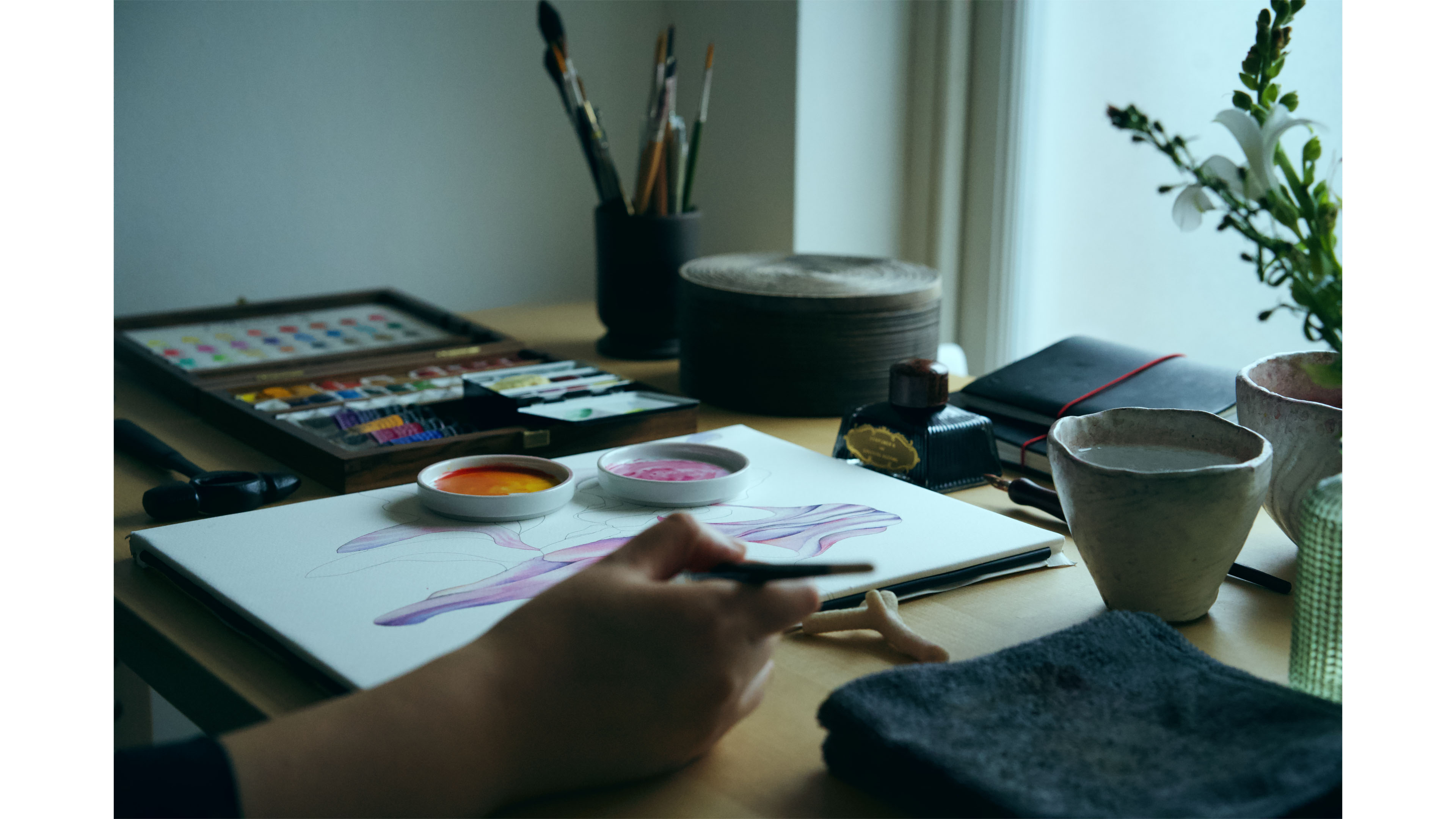
FZ Studio is a small, quiet workspace in London. This is where I spend most days with watercolour, watching how light moves across paper, pigment and everyday objects.
I don’t appear on camera very often, but much of what you see across FZ Studio begins here — on this table, through observation, experimentation and a quiet daily practice.
A Quiet Practice
My work moves between two connected ways of painting.
Observation studies help me look closely — at flowers, simple objects, light, colour and the way water moves through pigment. They are part of my everyday practice rather than a finished collection.
Alongside them, I develop the Inner Light paintings: quieter, more personal works inspired by mornings, forest edges and small moments from daily life.
The observation studies can often be seen in my paint-with-me videos and Shorts, while the finished body of work lives in the Gallery.
Process
Much of my process is about watching — how water moves, how one colour settles into another, how a wash changes as it dries, and when to leave the paper alone.
I tend to work slowly, testing how paper, water and pigment behave through small studies — noticing how colours blend, how light takes shape, and letting my hand settle into a calm rhythm.
This kind of close observation gradually finds its way into the quieter, more intuitive language of the Inner Light works.
The Paper I Paint On
The surface I paint on has become an important part of that process.
I currently work on Amalfi watercolour paper, a paper I was drawn to for the way it holds water, allowing colours to move and soften gradually, and for the gentle sense of light it gives to transparent washes.
Because paper can change the experience of watercolour so much, I wanted to make it possible to try this surface without having to buy a large quantity first.
A small Amalfi paper sample pack will be available through Studio Materials, giving you a simple way to test the paper with your own paints and see how it responds in your own practice.
Explore the paper →